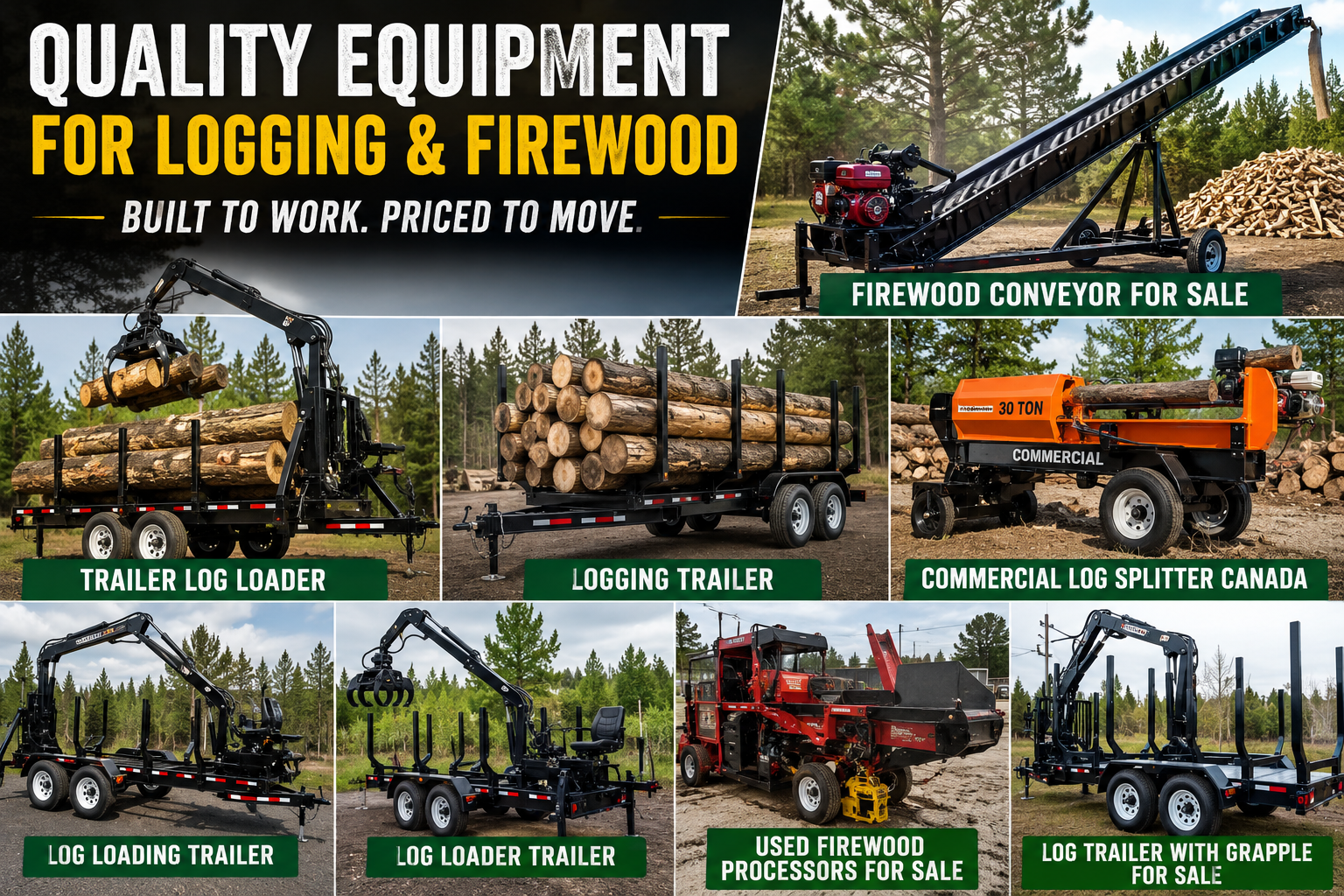
Handling large logs efficiently requires equipment designed for lifting, transporting, and loading timber with minimal effort. A log loader trailer combines hauling capability with loading convenience, making it an essential tool for forestry operations, firewood production, and woodland management.
Understanding how a log loader trailer works and knowing which features matter most can help you choose equipment that improves productivity while supporting safe operation.
What Is a Log Loader Trailer?
A log loader trailer is a trailer designed to transport logs while supporting efficient loading through compatible lifting equipment or integrated loading systems.
This combination allows operators to complete loading and transportation with fewer steps, reducing both labor and processing time.
Advantages of a Log Loader Trailer
Using a log loader trailer offers several operational benefits.
Faster Loading
Efficient loading systems reduce the time needed to prepare timber for transportation.
Benefits include:
- Shorter loading times
- Improved workflow
- Reduced manual lifting
- Greater daily productivity
These improvements become especially valuable during busy harvesting seasons.
Efficient Transportation
A properly designed log loader trailer carries timber securely while maintaining stability across different terrains.
Reliable transportation helps reduce delays between harvesting and processing.
Features to Evaluate
Before purchasing a log loader trailer, compare the most important specifications.
Carrying Capacity
The trailer should comfortably support expected timber loads without exceeding safe operating limits.
Matching capacity to workload improves both safety and performance.
Durable Construction
Forestry equipment operates under demanding conditions.
Look for trailers featuring:
- Reinforced steel frames
- Heavy-duty axles
- Strong hitch assemblies
- Durable support structures
Quality construction contributes to years of dependable service.
Secure Log Supports
Well-designed stake systems help prevent logs from shifting during transportation.
Secure loads improve:
- Driver safety
- Equipment protection
- Transportation efficiency
- Operational confidence
Typical Applications
A log loader trailer supports a wide range of forestry activities.
Common uses include:
Timber Collection
Harvested logs can be loaded and transported directly from the worksite.
Firewood Operations
Operators often haul logs from storage areas to processing locations using a log loader trailer.
Woodland Maintenance
Managing wooded properties frequently involves moving fallen trees and harvested timber.
The trailer provides a practical transportation solution.
Choosing the Right Trailer
Selecting the best log loader trailer begins with understanding your operational needs.
Production Requirements
Evaluate:
- Daily hauling volume
- Average log dimensions
- Travel distance
- Available towing equipment
Choosing equipment based on actual workload helps maximize efficiency.
Working Environment
Terrain influences trailer performance.
Forest roads, hills, and uneven ground require trailers built for stability and durability.
Selecting equipment suited to local conditions improves reliability.
Maintenance Best Practices
Routine maintenance protects your investment.
Regular Inspections
Before every use, inspect:
- Tires
- Hitch components
- Frame connections
- Fasteners
Early detection of wear helps prevent costly repairs.
Lubricate Moving Components
Proper lubrication reduces friction while extending the life of moving parts.
Maintaining lubrication schedules supports dependable performance throughout the year.
Clean After Use
Removing bark, dirt, and debris minimizes corrosion and keeps inspections simple.
Clean equipment also performs more efficiently over time.
Productivity Tips
To maximize the value of a log loader trailer, organize transportation efficiently.
Helpful practices include:
- Preparing loads before transport
- Maintaining balanced weight distribution
- Scheduling preventive maintenance
- Planning efficient hauling routes
These improvements reduce downtime while increasing daily output.
Safety Recommendations
Safe operation should always guide equipment use.
Operators should:
- Secure logs carefully
- Follow load capacity guidelines
- Inspect equipment regularly
- Drive cautiously on rough terrain
Proper safety practices protect both equipment and workers.
Long-Term Value
A well-maintained log loader trailer delivers dependable performance for many years.
Investing in durable construction, appropriate capacity, and consistent maintenance supports lower operating costs while improving efficiency.
Conclusion
A quality log loader trailer simplifies timber handling by combining efficient transportation with practical loading capabilities. By selecting equipment that matches your production needs, maintaining it regularly, and following safe operating practices, you can improve productivity while extending equipment life. Whether used for forestry, land management, or firewood preparation, a reliable log loader trailer is an excellent investment for efficient wood handling.